
Sensitive teeth – when they twinge
A short, sharp twinge when you drink cold water or eat ice cream is a typical sign of sensitive teeth. It is annoying, but usually something can be done about it.
Why do teeth become sensitive?
Beneath the enamel lies the dentine, which is full of tiny channels leading to the nerve of the tooth. When the dentine is exposed, cold, heat, sweet and acidic things can reach the nerve and cause a twinge. This typically happens when:
- the gums have receded, exposing the neck of the tooth,
- the enamel is worn by acid or teeth grinding – read about tooth wear,
- you brush too hard or with a hard toothbrush,
- there is a cavity, a crack or a leaking filling,
- you have had a new filling or whitened your teeth – this usually passes by itself.
Practical advice
- Use a soft toothbrush and brush with small movements without pressing hard.
- Try a toothpaste for sensitive teeth, and give it a couple of weeks.
- Limit acidic drinks such as fizzy drinks, juice and sports drinks, and wait before brushing straight after something acidic.
- If you grind your teeth at night, a night guard can protect them.
When should you see the dentist?
If the pain comes on suddenly, is in one particular tooth, lasts after the cold has gone, or it hurts to bite, it may be a cavity, a crack or an inflamed nerve. You should then have the tooth examined. If you are in severe pain, read about emergency toothache and call 45 87 12 26.
Need help?
Call 45 87 12 26 or book an appointment. New patients are welcome. Emergency toothache outside opening hours: Tandlægevagten (emergency dental service), Oslo Plads 14, København Ø, tel. 70 25 00 41.
This page gives general information and does not replace an examination by a dentist.
Reviewed by dentist Kenny Deneke Sørensen and dentist Anne Lytt Rahbek, Tandlægerne Lyngby Torv 1. Both qualified in 2002 from the School of Dentistry at the University of Copenhagen.
Questions and answers
Why do my teeth twinge?
Usually because the dentine is exposed, for example due to receding gums or worn enamel. Cold, heat and sweet things can then reach the nerve of the tooth.
Does toothpaste for sensitive teeth help?
For many people it helps if used regularly for a few weeks. If it does not help, the cause should be examined by a dentist.
Is it normal for a tooth to be sensitive after a new filling?
Yes, mild sensitivity to cold in the first days or weeks is common and usually passes. If it gets worse, or it hurts to bite, contact us.
Related treatments
Fillings
Tooth-coloured composite fillings for cavities and broken teeth.
From 497,00 kr.Tooth wear and bite raising
Rebuilding worn teeth and a collapsed bite.
Night guard for teeth grinding
Relieves your teeth and jaw if you grind or clench your teeth.
Soft splint: 2.927,52 kr.Acute toothache
Toothache, a broken tooth or a lost filling? Call – we will find you an appointment quickly.
Ready to book an appointment?
Call 45 87 12 26 during opening hours, or book online. New patients are welcome.
How to find us
Tandlægerne Lyngby Torv 1
Lyngby Torv 1, 1. th. (1st floor right)
2800 Kongens Lyngby
You will find us on the 1st floor, to the right, in the corner building on Lyngby Torv – in the centre of Kgs. Lyngby, facing Lyngby Hovedgade. There are stairs up to the clinic and no lift, and unfortunately there is no wheelchair access.
- Train and light rail: From Lyngby Station it is about 250 metres up to the square – a 3–4 minute walk.
- Bus: Many routes serve the bus terminal at Lyngby Station, including 184, 300S, 388 and 400S.
- Car: 2-hour parking around the clinic (remember your parking disc) and paid parking under Lyngby Storcenter and at Magasin.
- Need help? If you find stairs difficult, please call 45 87 12 26 before your visit.
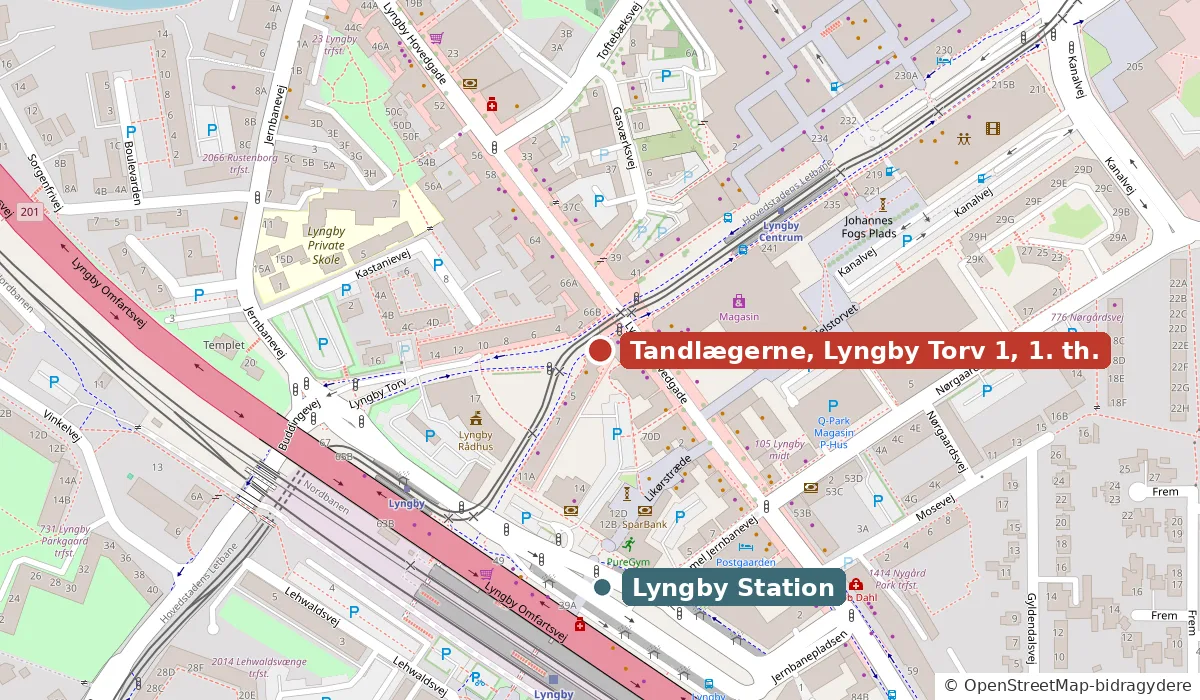
The map is only loaded from Google when you tap. Google may then set cookies. Read more.
Image: © OpenStreetMap contributors